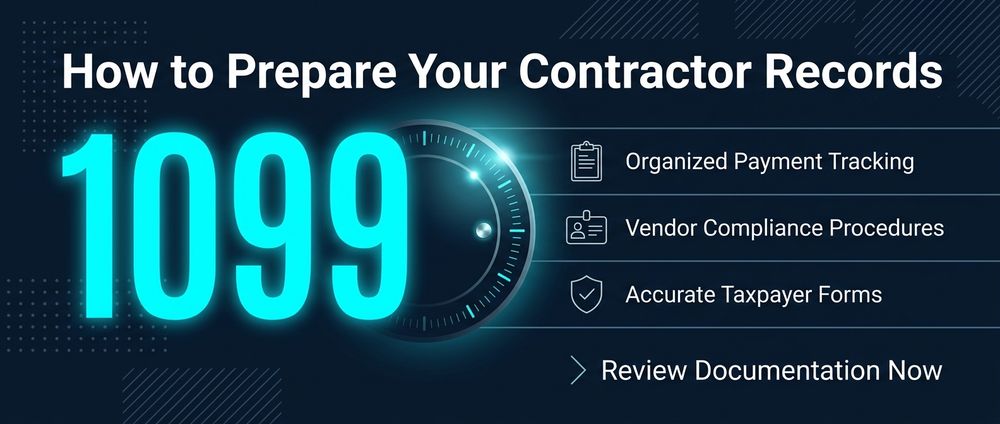
Managing independent contractor filings requires precision, especially as updated federal thresholds alter how you report nonemployee compensation. When you establish organized contractor payment tracking throughout the year, you avoid last-minute scrambles and costly administrative penalties. Implementing clear vendor compliance procedures ensures your business collects necessary taxpayer identification forms before issuing disbursements. Reviewing your internal documentation practices now gives you complete confidence in your financial records and guarantees full alignment with current 1099 reporting requirements.

-
How to Prepare Your Contractor Records for New 1099 Rules
CLICK HERE TO READ THE FULL ARTICLE »
-
How to Spot Costly Bookkeeping Errors Before They Happen

Bookkeeping errors can quietly drain your business resources and lead to major headaches during audit preparation. By understanding the most common mistakes in small business accounting, you can take proactive steps to catch issues before they escalate. This article guides you through practical strategies to spot costly missteps early, helping you maintain accurate records and avoid compliance pitfalls. Stay ahead of potential problems and keep your financials audit-ready with these expert tips.
CLICK HERE TO READ THE FULL ARTICLE »
-
How Smart Bookkeeping Improves Cash Flow for Service Businesses

Unlocking strong cash flow is essential for every service-based business, and smart bookkeeping is the key to making it happen. By prioritizing accurate bookkeeping for service businesses, you gain valuable financial insights that reveal hidden opportunities to improve cash flow management. With timely, clear reporting, you can make confident decisions, address issues before they escalate, and focus your energy on growing your business. Discover how reliable bookkeeping not only saves you time but also supports your long-term success through actionable financial data and proactive support.
CLICK HERE TO READ THE FULL ARTICLE »

